


Annually, On March 10th in the Lunar Calendar, there are thousands of Vietnamese people from all walks of life, different provinces, streaming back to Hùng Kings Temple Complex, Phu Tho Province on the occasion of Hung Kings Festival in order to celebrate the renowned Hung Kings (or “Vua Hùng”) to pay tribute to them as the founding fathers who set the cornerstones of Van Lang, the predecessor of modern-day Vietnam.
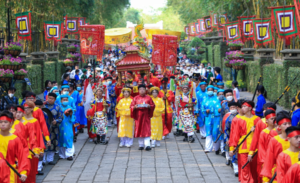
As mentioned, the festival is celebrated falls on the 10th day of the third month in the lunar calendar and. The main destination for celebration and visits is the Hung Temple, Hùng Kings Temple Complex, Phu Tho Province. Other provinces can also commemorate within their places.
At first, the Hung Kings Commemoration Day was a local event. It was not until the Lê Dynasty that the ceremony became a nationwide festival. During the Nguyễn Dynasty, in the second year of Khai Dinh’s reign, the Governor of Phú Thọ Province, Lê Trung Ngọc, submitted a Rite Register to designate the 10th day of the third lunar month — one day after the anniversary of the 18th Hung King — as the official date of the ceremony [1][2]. This is confirmed by the inscription on the Hùng Kings’ stele located at Đền Thượng (Upper Temple) on Nghĩa Lĩnh Mountain. The stele was erected in the 15th year of Bảo Đại’s reign (1940) by Bùi Ngọc Hoàn, Deputy Minister and Governor of Phú Thọ Province. It states:
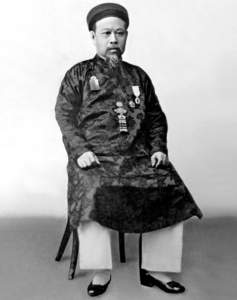
“In the past, the national ceremony was held in autumn. In the second year of Khải Định’s reign (1917), Phú Thọ Governor Lê Trung Ngọc submitted a request to the Ministry of Rites to designate the 10th day of the third lunar month as the official national ceremony day — one day before the ancestral death anniversary of the 18th Hùng King. The actual death anniversary (the 11th of the third lunar month) was left for the local people to observe.”
Since then, the Hùng Kings’ Commemoration Day on the 10th day of the third lunar month has been officially recognized by law [1].
The ceremony primarily involves meaningful rituals including palanquin procession resplendent with colours from flags, flowers, traditional clothes, ceremonial canopies and palanquins, and offering incense to the Upper Temple.
After the rites comes the eventful Festivities, where goers revel in Xoan singing, vibrant folk games, traditional cake wrapping contests, cultural performances, and exciting ethnic sports competitions, which attract local people and international visitors.
Hung Kings Commemoration Day is the occasion to remind, crystalize, and promote the tradition of “Paying tribute to the roots”, which encourages every single Vietnamese citizens to show great gratuities to the Hung Kings for shaping the nation and the war heroes who strived and sacrificed for the cause of the motherland. This is also a crucial time to introduce Vietnam’s unique, precious heritage that has existed for thousands of years and become deeply embedded in the soul of the citizenry.
On December 6th, 2012, the Hung Kings Commemoration Day was officially acknowledged by UNESCO as the “Representative Intangible Cultural Heritage of Humanity”, underscoring the significance of preserving such a valuable ceremony and passing on to the next generations [1][3].
REFERENCES
- The history and essence of Hung Kings’ Festival. E-portal of Ha Tinh Provincial People’s Committee. https://hatinh.gov.vn/lich-su-y-nghia-ngay-gio-to-hung-vuong
- Governor of Phu Tho Province Le Trung Ngoc. E-portal of Phu Tho Provincial Department of Culture, Sports and Tourism. http://svhttdl.phutho.gov.vn/tin/tuan-phu-le-trung-ngoc-voi-viec-dinh-le-quoc-le-gio-to-hung-vuong_658.html
- The History of Hung Kings and Hung Kings Commemoration Day. National Archives Centre.
LE QUANG